The Israeli war on Gaza, which began with Operation Al-Aqsa Flood on October 7, 2013, inflicted heavy losses on the Gaza Strip and the Palestinian territories as a whole. Despite the scale of the destruction and the human and economic losses caused by the war, the Israeli occupation state also suffered significant losses, particularly with the launch of boycott campaigns that began after the war escalated.
Although the idea of a boycott initially emerged in a disorganized manner through social media platforms and calls issued by individuals, organizations, and political parties, it has since evolved into a more structured movement that has had a significant impact on the Israeli economy.
The Beginning of the Boycott
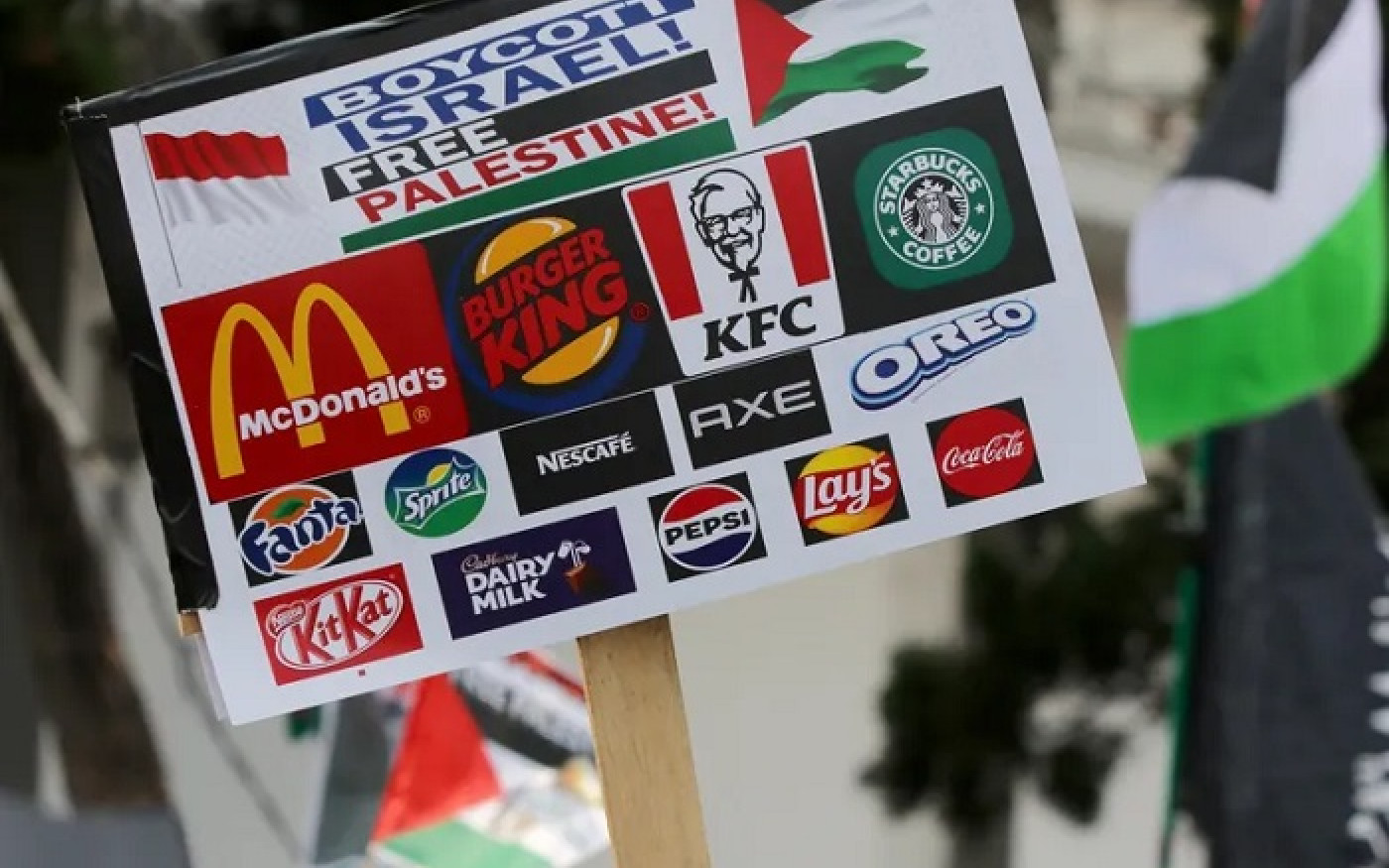
On social media, calls to boycott companies supporting the occupation and funding its operations in the Gaza war spread. These calls intensified as the war escalated. Alongside these individual calls, parties and organizations began to adopt the idea of a boycott and broaden its scope. In addition to boycotting the products of Western companies supporting the occupation, Arabs, even before the West, began boycotting companies that invest heavily in Israel, including technology companies like Intel and Amazon.
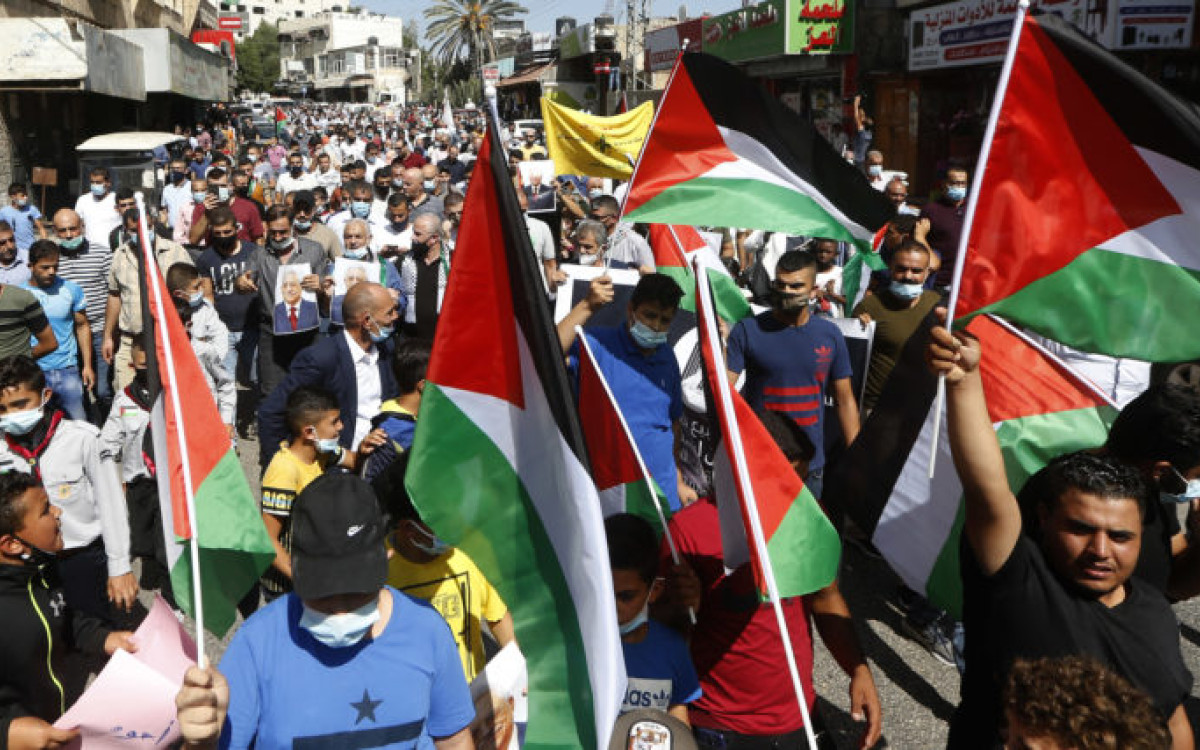
Despite the disasters, casualties, and destruction left by the Israeli war on Gaza, one positive outcome of the war was the revival of the Palestinian cause in the eyes of the Western world. The cause gained unprecedented global solidarity due to the atrocities committed by the occupation forces, which led to an increase in boycott campaigns. Instead of being limited to the Arab world and its citizens, many countries around the world joined the boycott, and global campaigns to boycott Israel, its companies, and those cooperating with it spread.
BDS and its Impact on the Occupation Economy
In parallel with the global Boycott, Divestment, and Sanctions (BDS) movement, the Palestinian Boycott, Divestment, and Sanctions (BDS) movement has been fulfilling its stated mission since its inception in 2005: boycotting Israel, divesting from it, and imposing sanctions. This has contributed to expanding the scope and spread of the boycott concept, and consequently, increasing the number of participants in boycotting the occupying state. With the movement's success in isolating the Israeli regime academically, culturally, and politically, Israel has considered the movement one of its greatest "strategic threats," prompting it to spend millions of dollars to counter it and end the boycott.
The idea behind boycotting companies that support Israel is based on the premise that these companies generate revenue and profits, while the countries supporting the occupying state collect taxes from them. Ultimately, a significant portion of these taxes goes to Israel to finance its war on Gaza. This is what prompted thousands of citizens in America, for example, to demonstrate against the funding of Israel with American taxpayers' and companies' money.
The Boycott, Divestment, and Sanctions (BDS) movement, during the 2014 Israeli war on Gaza, inflicted significant losses on the Israeli economy. A UNCTAD report indicated a 46% decrease in foreign direct investment in the Israeli economy during 2014 compared to 2013. The growing impact of the BDS movement was directly reflected in the Israeli economy, with the value of Israeli exports to the occupied territories falling to $2.9 billion in 2014, compared to $3.4 billion in 2013—a 15% decrease. These exports declined further in the first quarter of 2015 by 24%, according to a World Bank study. Furthermore, many international companies terminated their contracts with Israel, and the European Union decided to label products imported from Israel, significantly impacting the Israeli economy.
With the Al-Aqsa War, the movement regained momentum, announcing several gains achieved as a result of the boycott. These included the cancellation of contracts between numerous companies and Israel, the cancellation of events by artists and writers scheduled to take place in Israel, the withdrawal of investments by several banks, and the freezing of agreements by several municipalities, such as Barcelona's twinning agreements with Israel.
The Political and Social Dimensions of Boycott Campaigns
Dr. Mohamed Ezz El-Arab, Head of the Arab and Regional Studies Unit at the Al-Ahram Center for Political and Strategic Studies, states in a study published by the center that the most prominent political and social dimensions of boycott campaigns are the resurgence of public opinion's influence on economic and social issues, and the exertion of pressure on countries supporting Israel in the war on Gaza. These campaigns are sometimes driven by political motives and at other times by religious considerations. These campaigns are not new; rather, their intensity and effectiveness against Israel increase during armed confrontations with Palestinian resistance groups. In some cases, the boycott focuses on a few companies considered to be the most supportive of Israel in order to amplify its impact.
Azab Al-Arab emphasized that campaigns calling for economic boycotts, often cloaked in political dimensions, frequently generate significant engagement and influence a shift towards competing local products when boycotting goods and products belonging to Western chains and brands that support Israel.
Losses for Supporting Companies
Americana: In its 2024 annual financial statement, released 13 months after the start of the war in Gaza, Americana, the operator of KFC, Pizza Hut, and Hardee's restaurants in the Middle East and North Africa, announced a 38.8% drop in net profit to $158.8 million in 2024, compared to $259.5 million in 2023.
The company stated that it recorded a 9% decline in revenue by the end of 2024, reaching $2.2 billion. The decline was attributed to lower sales resulting from ongoing geopolitical tensions in the region.
Meanwhile, Yum Brands, the American-owned franchisee of KFC and Pizza Hut in Turkey, announced the termination of its franchise agreement with the local restaurant operator, İş Gada. This led to the closure of 537 branches and the bankruptcy of the Turkish operator, which had accumulated debts exceeding 7.7 billion Turkish lira (approximately $214 million). This followed a 40% decline in KFC sales in Turkey in recent months.
Carrefour: The largest boycott campaign targeted Carrefour, operated by the Majid Al Futtaim Group. This stemmed from Carrefour's partnership with the Israeli company Electra. With the Al-Aqsa War, calls to boycott Carrefour intensified across Arab countries. This prompted the Majid Al Futtaim Group to completely cease its business dealings with Carrefour Jordan. Consequently, Carrefour Jordan was forced to close several branches throughout the year, ultimately leading to the complete closure of Carrefour's operations there.
Carrefour in Oman also decided to cease operations in the Sultanate at the beginning of January. The company stated: “Dear customers, effective January 7, 2025, Carrefour’s operations in the Sultanate of Oman will cease on behalf of Carrefour’s management and employees, following the success of boycott campaigns within Oman in impacting sales at Carrefour branches.”
Majid Al Futtaim’s 2024 semi-annual report showed a 47% decrease in profits for Al Futtaim Retail. Carrefour also faced pressure during the French group’s 2024 general meeting, both inside and outside the meeting itself. Shareholders, including activists from various pro-Palestinian organizations, questioned management about the company’s complicity in Israeli crimes. Meanwhile, activists demonstrated outside the meeting venue to condemn Carrefour’s complicity and involvement in Israeli crimes against Palestinians.
Starbucks: A few days ago, during his visit to the UAE, Starbucks CEO Brian Nicol urged customers to stop boycotting the company, emphasizing that the boycott could lead to its complete collapse. He stressed, "We do not support any military."
The CEO's remarks came after significant losses suffered by Starbucks since the start of the Israeli offensive on Gaza. The company's stock fell by 1.6% by the end of last year, marking its longest losing streak since Starbucks first went public in 1992, according to Bloomberg. This decline resulted in a 9.4% drop in the company's market capitalization, equivalent to $12 billion.
Nestlé: In a statement released in late 2024, the company, which owns several brands such as Nescafé and KitKat, confirmed that since the outbreak of the Gaza war, it had become a central target of boycott movements. According to its internal real estate growth indicator, Nestlé's sales growth fell from 2.2% in the second quarter of 2024 to 1.3% in the third quarter. The company's sales also declined by 2.5% in the first nine months of the year, compared to the same period in 2023.
Companies Halt Investments
International reactions to the Gaza war prompted many major companies to withdraw their investments from the occupying state, following widespread calls for a boycott. Intel, the chip giant, canceled a $25 billion investment agreement intended to establish factories within the occupied territories. The agreement, which included the employment of 12,000 Israelis, was Intel's largest agreement with the Israeli government. However, its implementation was suspended indefinitely.
International pressure and boycott calls prompted the French insurance company AXA to sell its investments in all major Israeli banks. This came after the company was targeted by a boycott campaign, particularly following its investments in Israeli banks and the Elbit Systems defense company, due to their complicity in Israeli settlements built on Palestinian land.
In 2018, AXA partially divested from Elbit Systems. The campaign also succeeded in pressuring AXA to divest from two Israeli banks, Bank Mizrahi-Tefahot and Bank of Israel First, by the end of 2022.
In mid-June of last year, coinciding with the escalation of the global boycott campaign against AXA, the French insurance company divested from all Israeli banks, retaining only a few shares in Bank Leumi.
The matter wasn't limited to companies; countries also followed suit. In mid-2024, Ireland announced the withdrawal of millions of dollars in investments from Israel. The Irish National Treasury Management Agency confirmed its decision to withdraw approximately €3 million from its global equity portfolio within the Irish Strategic Investment Fund. This divestment decision pertains to investments totaling $3.2 million in six Israeli banks.
Similarly, the Richmond City Council in California announced its divestment from companies operating in Israel, becoming the second American city to do so after Hayward. Richmond has a portfolio of approximately $600 million invested in Israel, with only a small percentage, around 7%, likely to be invested.
In a significant move to support the Palestinian cause, the world's largest sovereign wealth fund announced it was divesting from Israel. Norway's sovereign wealth fund said it had divested from the Israeli telecommunications company Bezeq, selling all its shares, due to Bezeq's provision of telecommunications services to Israeli settlements in the occupied West Bank.
This decision by the world's largest sovereign wealth fund comes after its ethics watchdog adopted a stricter interpretation of ethical standards for companies that assist Israel's operations in the occupied Palestinian territories. The fund's ethics board has been investigating the existence of other companies that violate the guidelines governing its investments since the start of the war in Gaza.
According to the Financial Times, Barclays Bank, following significant pressure, withdrew its sponsorship of several events and is considering halting sales of Israeli government bonds. The bank dropped out of the top five Israeli bond dealers during the second and third quarters of 2024.
Israel's Budget Deficit
The ongoing war in Gaza has exacerbated Israel's budget deficit, which rose from 4.5% in January 2024 to 8.5% in September of the same year, settling at 7.7% by year's end. This represents approximately $40.5 billion of GDP, the highest level in years.
The OECD has warned that risks to the Israeli economy remain high. The escalation of renewed conflicts is significantly deteriorating public finances while directly curbing economic activity. This could lead to a loss of confidence among foreign investors, further increases in government bond yields, and a test of the currency's value.
In a related development, a report by the global credit rating agency Standard & Poor's predicted that the Israeli economy would not begin to recover until 2025 with modest growth of 2.2%. The agency also lowered Israel's long-term rating, attributing this to increased security risks in light of the military escalation in southern Lebanon.