The dust of war has not yet fully settled in the Gaza Strip, which continues to count its martyrs, tally its wounded and missing, and inspect the buildings destroyed by the two-year conflict. In Israel, the debate continues, and has even intensified, regarding the war's achievements and whether the government's stated objectives were met.
Retired General Yitzhak Brik, known in Israeli circles as the "Prophet of Doom," who repeatedly warned during the war against a ground incursion, the continuation of the conflict, and the army's lack of preparedness for ground battles, wrote an article published in the Maariv newspaper after the ceasefire agreement. Brik argued that Prime Minister Benjamin Netanyahu's stated goal of toppling Hamas was unattainable from the outset. Hamas will not surrender its weapons, nor will it be completely defeated by the Israeli army. This indicates that Netanyahu's objective was not practically achieved (according to Brik), and that the Israeli army will ultimately withdraw from the entire Gaza Strip, maintaining only a limited presence in buffer zones around Israeli settlements, known as "perimeter zones." Brik bases his predictions on the assumption that US President Donald Trump was the driving force behind this agreement and will be the one to pressure the parties to implement all its phases.
Conversely, some media and political figures in Israel still express concerns about a return to war should Trump turn his back on the region and become preoccupied with other issues, or should Netanyahu see such a return as a means to bolster his coalition and prolong his government's tenure. These figures believe that the failure to return the bodies of the Israeli captives held in the Gaza Strip all at once could be one of Netanyahu's motives for resuming the escalation. However, media outlets have reported that the army and security services have recommended the government use diplomatic channels to resolve the "crisis of the bodies."
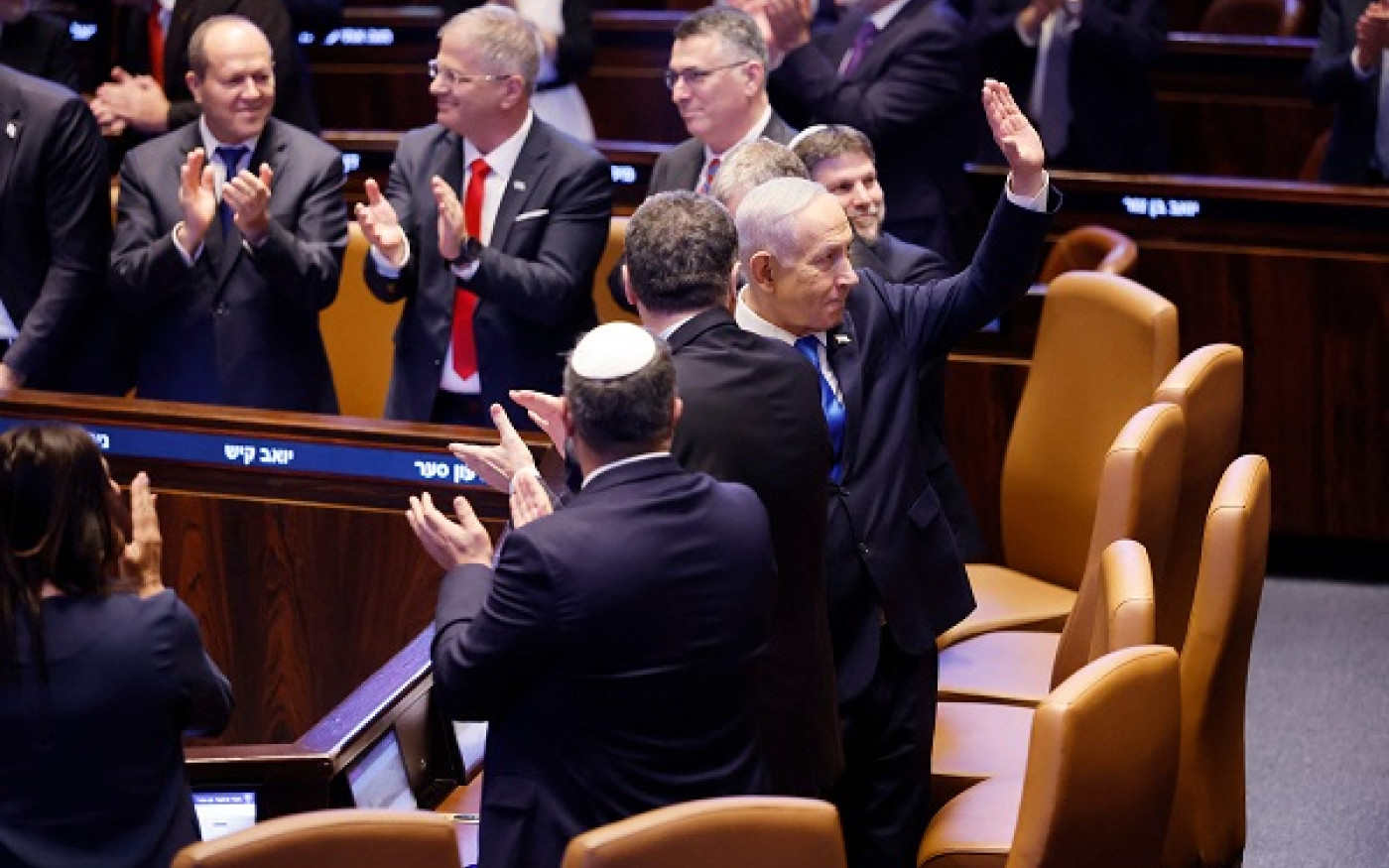
In any case, the Israeli Prime Minister's actions in the days following the US President's visit to the region suggest that he is preparing for all scenarios, including prolonging his current government's term as much as possible and bringing the "protesting" religious parties back into the fold. Netanyahu, who is said by Israelis and whose agreement was imposed upon him, as evidenced by Donald Trump's statements, is now shifting towards exploiting every stage of the agreement to consolidate his political position. This is especially true given that Trump's plan seeks to expand the framework of normalization agreements between Israel and several Arab and Islamic countries, most notably Saudi Arabia.
In recent days, the Israeli Prime Minister has been frequently speaking about Israeli unity and the need to solidify it after the war. He is also attempting to appeal to the public through actions designed to boost his popularity, such as visiting prisoners released by Hamas and contacting the families of the deceased. Furthermore, he and his Defense Minister sought to change the Israeli name for the war on Gaza from "Operation Iron Swords" to "Operation Rebirth" or "Operation Awakening." With these actions, he is trying to reinforce the narrative of an Israeli victory over Hamas, thus preparing for the upcoming elections. With the opening of the Knesset's winter session, the countdown to the elections has begun. The question remains: will they be held as scheduled in late October, or will Israel witness early elections?
There is no truly clear answer to this question, as it depends on many factors, some of which we will list as described by Israeli observers:
Journalist Dafna Liel, political correspondent for Israel's Channel 12, says that Netanyahu's coalition, in its current form, may not witness further defections, especially from the parties of Bezalel Smotrich and Itamar Ben-Gvir, who no longer have an electoral "interest" in withdrawing, particularly since the agreement secured the release of all living captives at once and was brokered by an American president acceptable to right-wing circles. Liel continues her analysis, saying that Ben-Gvir and Smotrich may occasionally accuse the government and its head of backing down or showing weakness in the face of Hamas, but they are unlikely to withdraw from the coalition at this stage.
In contrast, Netanyahu is seeking, during the remaining months of the current Knesset term, to enact laws that would increase the executive branch's control, diminish the role of the judiciary, and even interfere with the pace of his own corruption trial. He is also attempting to prevent the formation of an official commission of inquiry into the events of October 7, 2023, and the failure of the government, security services, and military to anticipate and respond to them effectively.
Meanwhile, in contrast to the positions of Ben-Gvir and Smotrich, which accompanied analyses of the continuation of the war on Gaza, the ultra-Orthodox parties Shas and United Torah Judaism, which withdrew from the coalition but maintained their support, have returned to the forefront amidst the ongoing crisis surrounding the draft law exempting ultra-Orthodox men from military service, a law these parties insist on passing.
A few days ago, MK Boaz Bismuth, head of the Knesset's Foreign Affairs and Defense Committee, announced that he would present key ideas and a document outlining principles for a draft law on "exemption from military service" to the Knesset for discussion. This announcement raised questions about whether the draft law would meet the demands of the Haredim (ultra-Orthodox Jews) and whether it would align with the spirit of the Supreme Court's ruling on the draft law. In this regard, Haaretz political commentator Yossi Verter questions Bismuth's and Netanyahu's objectives behind this "ill-conceived" document. Is it intended to entice Shas and United Torah Judaism MKs to return to the government, or, conversely, to provoke a coalition crisis with the religious parties and trigger elections focused on the draft law rather than the outcome of the Gaza war?
The government's stability in the coming period also hinges on the passage of the state budget in Israel. The law stipulates that the budget must be approved before the end of March, and if this deadline is missed, the Knesset will be dissolved, leading to early elections. It is clear that the upcoming budget, in particular, will be subject to much debate and perhaps even blackmail from the coalition parties (especially the ultra-Orthodox parties if no agreement is reached on a draft law regarding conscription), and it may also witness a significant increase in the budget.