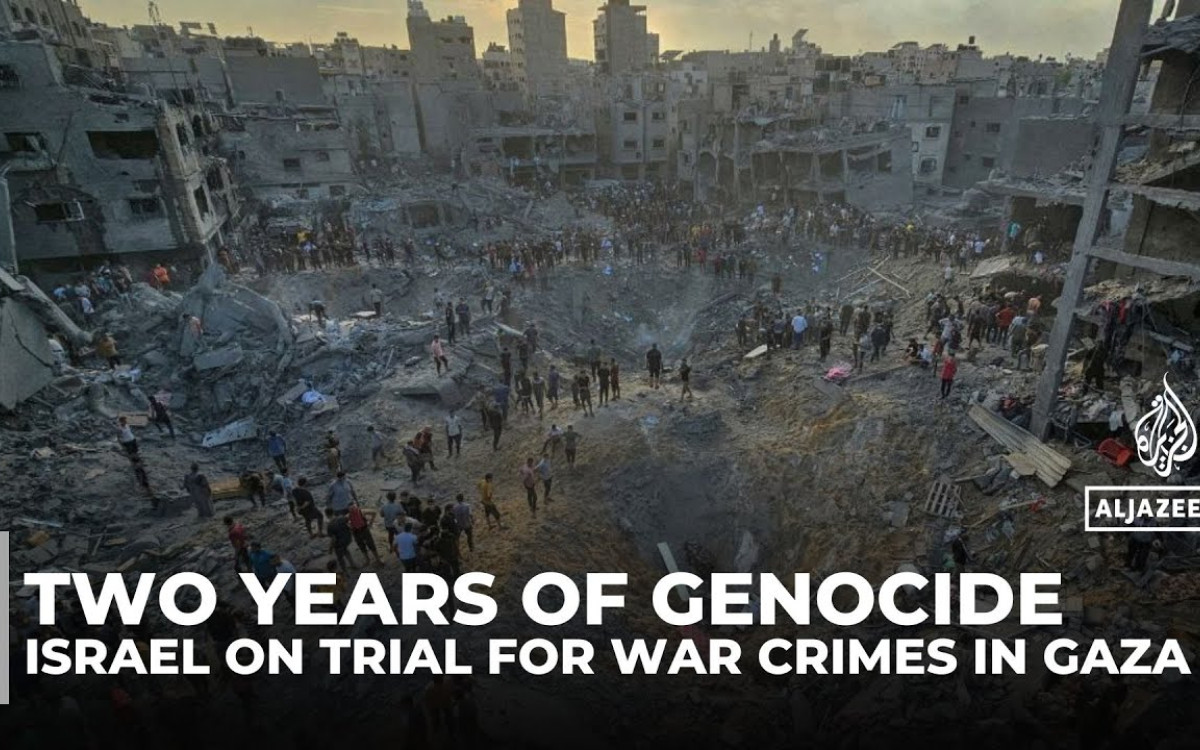
For years, Palestine has remained a politically sensitive and largely avoided topic in U.S. discourse. The American political landscape—essentially a one-party structure serving corporate interests, with the Democrats and Republicans as its two branches—has cultivated a culture of caution and silence around the Palestinian question. This has only intensified with the ongoing genocide in Gaza, a near-taboo topic among elected officials unwilling to challenge their pro-Israeli and Zionist donors. The Biden administration was openly complicit in the bombing of Palestinian civilians, while the barely seven-month-old Trump administration has shown a profound, even if unsurprising, negligence amid mass starvation. Local and state leaders have enabled a crackdown on dissent, deploying police against protesters and allowing law enforcement to detain and deport noncitizens who dared to raise their voices for Palestinian liberation. Against this backdrop, a Zohran Mamdani administration in New York City could represent a seismic shift.
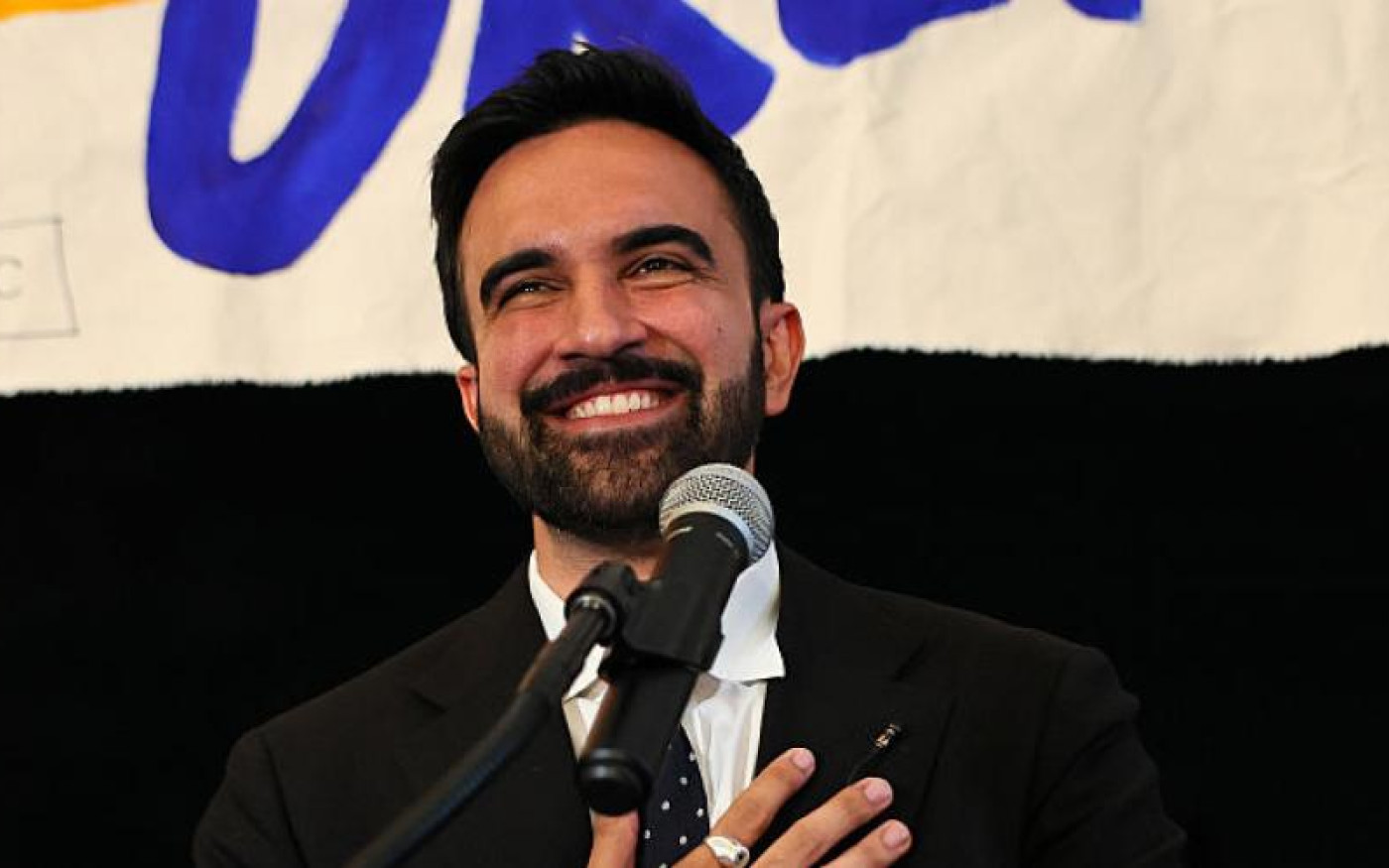
Americans and spectators across the world can't stop talking about Mamdani's Democratic nomination for mayor—and for good reason. The Muslim socialist lawmaker has spent his successful nine-month bid fighting the city's affordability crisis and advocating for working and middle-class New Yorkers. He has championed a rent stabilization freeze, free buses, city-owned grocery stores, and free childcare among a slew of policies that hopes to achieve a better quality of life for all residents across the five boroughs. But Mamdani's historic victory over conceding former Governor Andrew Cuomo's billionaire-backed campaign represents more than just a promising and affordable future for New York City's over eight million residents. Unlike many of his fellow Democrats, Mamdani has been unflinching in his support for Palestinian rights.
An immigrant from Uganda who grew up in Queens, Mamdani is one of few elected officials in the United States to openly support the Boycott, Divestment and Sanctions (BDS) campaign and frame the struggle for Palestinian liberation as one of empathy and solidarity. Throughout his run for the Democratic primary, including and especially at public-facing events, Mamdani never shied away from criticizing the Israeli government and condemning the genocide in Gaza and apartheid in the occupied West Bank. Mamdani has also called for an end to the Israeli occupation, said he would arrest Benjamin Netanyahu if he ever came to New York City while he was mayor, and has said the Palestinian cause is central to his identity, having spent some of his childhood in post-apartheid South Africa.
More recently, Mamdani shared a New York City stage with Columbia University alum Mahmoud Khalil—who was detained for over 100 days by U.S. Immigration and Customs Enforcement (ICE) at his university-owned residence for protesting the school's complicity in Israel's U.S.-backed siege in Gaza. Mamdani congratulated Khalil on his release and has pledged to stop ICE agents from deporting immigrants in the city throughout his campaign. Prior to Khalil's release, Mamdani confronted Donald Trump's border czar Tom Homan in Albany, accusing him of detaining New Yorkers without charge and questioned whether he believed in the First Amendment. He has even declined to condemn the slogan, “globalize the intifada”—a phrase which promotes international support for the Palestinian cause.
Mamdani's outspoken views on Palestine and free speech, while seemingly minimal and uncontroversial to the broader pro-Palestinian community, stand in stark contrast to the Democratic establishment as it stands today, including sitting New York City mayor Eric Adams. Adams has routinely ordered the arrests of hundreds of protesters—including university students and faculty—for participating in anti-genocide demonstrations across the city since the wave of protests began in October 2023.
Since Mamdani's win, fueled by endorsements from Sen. Bernie Sanders and Rep. Alexandria Ocasio-Cortez, some Democrats like Sen. Elizabeth Warren have endorsed his mayoral bid while other leaders view Palestinian solidarity as a third rail—and, in some cases, attacking Mamdani for his views. In a WNYC interview, Senator Kirsten Gillibrand (D-NY) falsely claimed that Mamdani had made “references to global jihad” and, after pressure, apologized to him over the phone for misrepresenting his campaign. Representative Eric Swalwell (D-CA) told CNN that he doesn't “associate” himself with what Mamdani “has said about the Jewish people,” despite him repeatedly committing to defend and serve Jewish New Yorkers throughout his campaign. Representative Laura Gillen (D-NY) has said, without evidence, that Mamdani demonstrated “a deeply disturbing pattern of unacceptable antisemitic comments.”
The Democratic impulse to label Mamdani, who is admittedly not radical whatsoever in his views, as antisemitic based on his support for Palestinian rights reveals a hesitation to think beyond the interests of the Israeli and Zionist lobby in the United States. It is also indicative of Kamala Harris' failed presidential campaign, which was largely defined by this hesitation to speak for the young voters who have been vehemently against Joe Biden's complicity in Israel's genocide in Gaza.
This cycle, however, could very well end with Mamdani as mayor of the largest city in the United States. More Democrats, including Senate Minority Leader Chuck Schumer (D-NY) and House Minority Leader Hakeem Jeffries (D-NY), have defended and congratulated Mamdani even if they haven't yet provided proper endorsements. Mamdani's commitment, not just to the working-class New Yorker but to immigrants and dissenters of genocide, has galvanized a new generation of politically engaged voters who feel alienated by the Democratic establishment. His unapologetically progressive platform, which includes a staunch anti-war stance, has the potential to transform the party itself.
A Zohran Mamdani mayoral administration would mark an unprecedented turning point not just for New York City politics, but for the national discourse surrounding Palestine. His commitment to Palestinian liberation, and to the broader principles of anti-imperialism and immigrant dignity, signals a break from the cowardice that has long defined both major parties in the United States. Mamdani's potential mayorship offers a blueprint for a new kind of politics, a new kind of leadership—one rooted in solidarity rather than silence. If elected, his administration could very well normalize conversations around Palestinian freedom and challenge the pro-Israeli orthodoxy that dominates U.S. political discourse, creating a city government that protects the rights of those who speak out against genocide. For the Palestinian cause, Mamdani's victory wouldn't just be symbolic. It could serve as a catalyst for change.